Mindful Digital Reset
Gen Z reclaims focus and balance through digital minimalism

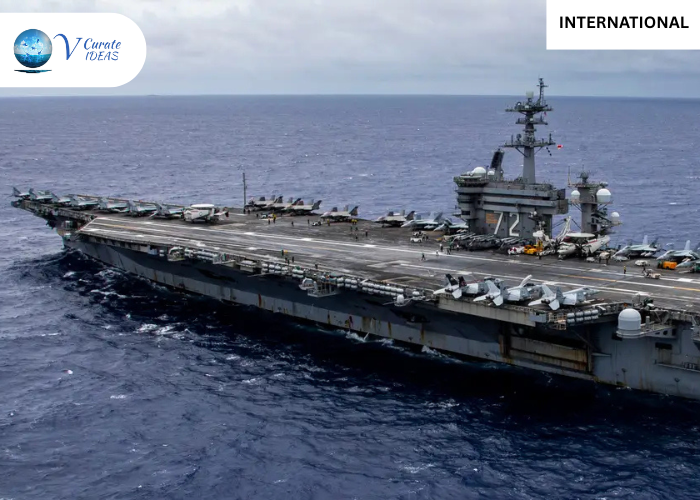
The United States has significantly increased its military presence near Iran, with satellite imagery confirming the location of the USS Abraham Lincoln in the Arabian Sea, approximately 700km off the coast of Oman. The nuclear-powered aircraft carrier leads a strike group that includes guided missile destroyers and carries around 90 aircraft, including F-35 fighter jets, along with a crew of more than 5,600 personnel. Although it was reportedly deployed to the Gulf region in late January, it had not appeared in publicly available satellite imagery until recently due to limited coverage over open waters.
The deployment comes as US and Iranian officials prepare for a second round of talks in Switzerland. Iran has indicated that discussions will focus on its nuclear programme and the possible lifting of economic sanctions, while Washington has signalled broader security concerns may also be raised.
Satellite tracking indicates at least 12 US naval vessels are currently positioned across the Middle East. Alongside the Abraham Lincoln, destroyers have been identified in the Gulf, the eastern Mediterranean near Souda Bay, and the Red Sea. Additional combat ships remain stationed at Bahrain’s naval base. Reports also indicate that the USS Gerald R. Ford, the world’s largest aircraft carrier, has been sent toward the Middle East and could arrive within weeks, further strengthening the US naval presence in the region. In addition to warships, there has been a noticeable increase in US military aircraft movements. Fighter jets, including F-15 and EA-18 aircraft, have reportedly been stationed at bases in Jordan, while cargo planes, refuelling aircraft and communications support assets have moved from the United States and Europe into the region.
Iran has responded with its own show of force. The Islamic Revolutionary Guard Corps (IRGC) launched maritime drills in the Strait of Hormuz, a strategically vital waterway through which roughly one-fifth of global oil and gas supplies transit. Iranian state-linked media showed IRGC Commander-in-Chief Maj Gen Mohammad Pakpour inspecting naval units and overseeing missile launches during the exercises. The Strait of Hormuz remains one of the world’s most critical shipping routes, making any military activity in the area particularly sensitive for global energy markets and regional stability.
Military analysts suggest the current US build-up reflects a broader deterrent strategy, with a force posture designed to sustain operations if required while countering potential responses against US assets in the Middle East and allied interests. Diplomatic negotiations between Washington and Tehran are expected to play a key role in determining whether tensions escalate or ease in the coming weeks.

Gen Z reclaims focus and balance through digital minimalism

Gen Z reshapes art and business through AI

Why Gen Z is transforming fashion with eco conscious style choices

AI companions redefining modern connection and digital intimacy

Analyzes how climate change solutions are inspiring green technology innovations in cities globally.

Explores how remote work trends reshape urban life, productivity, and city economies worldwide now.
© Copyright 2019 - 2026, All Rights Reserved