Why Cash App Changed How Young Adults Manage Money
A detailed review of Cash App money management features and why simple digital finance tools are gaining popularity

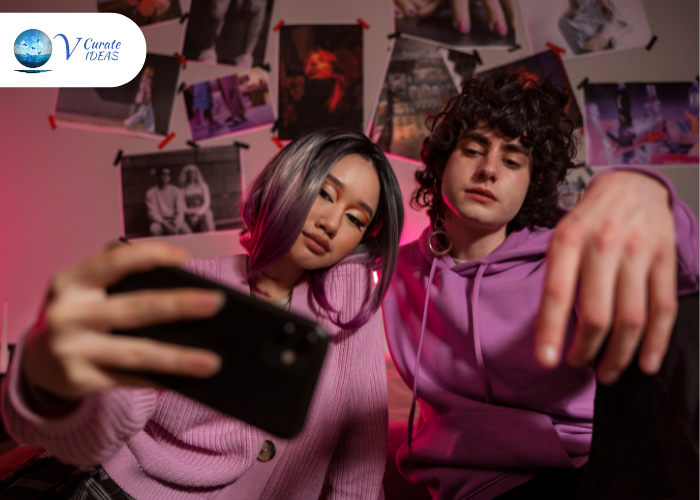
In today’s hyper-connected world, social media platforms are no longer just tools for entertainment they are shaping how people think, behave, and define reality. Among them, TikTok stands out as one of the most powerful cultural forces. With its endless stream of short-form videos, TikTok has created a space where trends spread rapidly and begin to feel universal. What once seemed unique or niche quickly transforms into something widely accepted as “normal.” The question is no longer whether TikTok influences us it clearly does. The real question is: how deeply is it shaping our perception of reality?
How Social Media Trends Influence Consumer Behavior
At the center of TikTok’s impact is its highly advanced algorithm, particularly the For You Page (FYP). Unlike traditional platforms such as Instagram, TikTok doesn’t rely heavily on who you follow. Instead, it analyzes user behavior what you watch, how long you engage, what you skip, and what you interact with. This creates a personalized content bubble, where users are consistently exposed to similar ideas, trends, and lifestyles. Over time, this repetition leads to what psychologists call the Mere Exposure Effect, where repeated exposure makes something feel familiar and acceptable. As a result, users begin to confuse frequent exposure with reality, believing that what they see online reflects how most people live.
One of TikTok’s most defining features is its ability to turn micro-trends into mainstream norms. Whether it’s beauty standards, productivity routines, or relationship advice, TikTok amplifies certain behaviors until they feel like expectations rather than choices. The rise of aesthetics like the “clean girl” look, hyper-productive lifestyles, and constant self-improvement culture has created a new digital standard. These trends often appear aspirational, but they can quickly become overwhelming when users feel pressured to match them. This shift highlights a key issue: TikTok doesn’t just reflect culture it accelerates and reshapes it.
TikTok thrives on participation. Viral sounds, challenges, and formats encourage users to recreate and engage with trending content. While this fosters creativity, it also introduces a subtle form of digital conformity. Users may feel that staying relevant requires adapting to trends, even if those trends don’t align with their authentic selves. Over time, this creates a cycle where:
This pressure is rarely explicit but it is powerful.
TikTok doesn’t just influence what people do it influences who they think they should be. Constant exposure to curated lifestyles can distort self-perception and create unrealistic benchmarks for success, beauty, and happiness. The comparison culture fueled by TikTok often leads to:
Even when users understand that content is filtered or staged, the emotional impact remains. The line between inspiration and comparison becomes increasingly blurred.
Not all influence is obvious. TikTok often promotes subtle belief systems what can be described as soft norms. These are ideas that gradually become accepted without being openly questioned. Examples include the belief that everyone should be constantly working on self-improvement, achieving financial independence early, or maintaining ideal relationships. While these ideas can be positive in moderation, TikTok often presents them as universal standards, ignoring individual differences and circumstances.
Another powerful effect of TikTok is the creation of a false sense of consensus. When users repeatedly see similar opinions, they may assume those views represent the majority. This is linked to the False Consensus Effect, where individuals overestimate how widely their beliefs are shared. In reality, TikTok feeds are highly filtered, meaning users are often seeing a limited perspective rather than a balanced view.
The impact of TikTok on mental health is complex. On one hand, it provides community, awareness, and representation. On the other, it can contribute to stress, anxiety, and burnout. Positive impacts include increased conversations around mental health and the ability to connect with like-minded individuals. However, the constant exposure to idealized lifestyles can also create pressure to achieve unrealistic standards. This duality makes TikTok both empowering and overwhelming at the same time.
Completely avoiding TikTok isn’t necessary but mindful usage is essential. Users can protect their perspective by actively curating their feed, questioning trends, and limiting comparison. Taking breaks, engaging with diverse content, and remembering that social media reflects a highlighted version of reality can help maintain balance.
In the digital age, the concept of “normal” is no longer shaped solely by real-world experiences it is increasingly influenced by algorithms and online trends. Platforms like TikTok have the power to redefine cultural expectations at an unprecedented pace. Ultimately, what we consider normal is not just discovered it is constructed. And in a world where algorithms shape perception, the most important skill is not following trends but questioning them.

A detailed review of Cash App money management features and why simple digital finance tools are gaining popularity
A detailed review of Airbnb travel experience and why unique stays are changing the way people explore.

A detailed review of CeraVe skincare products and why simple routines are shaping modern beauty habits.
A detailed review of Spotify music streaming experience and why it remains a favorite digital platform

A detailed review of ThredUp online thrift shopping and why sustainable fashion is gaining popularity.
© Copyright 2019 - 2026, All Rights Reserved