Why Cash App Changed How Young Adults Manage Money
A detailed review of Cash App money management features and why simple digital finance tools are gaining popularity


AI side hustles are everywhere right now.
You can find people selling AI-generated content, building chatbots, creating videos, designing graphics, automating business tasks and offering AI-assisted freelance services.
That sounds exciting.
It also creates a problem.
If everyone has access to the same AI tools, what makes your side hustle worth paying for?
That is the question that matters in 2026.
The AI side-hustle opportunity is real, but the easy-money version of the story is getting weaker. AI can make research, drafting, design, editing and repetitive work faster. It does not automatically create customers, expertise or trust.
The opportunity is shifting from using AI to make things to using AI to solve problems better.
The first wave of AI side hustles focused heavily on output.
Write articles with AI.
Generate images.
Create videos.
Sell prompts.
Make social media posts.
Those activities have not disappeared, but many have become easier for almost everyone to do.
That means the supply of generic AI-assisted work is increasing.
At the same time, businesses still need people who can take AI output and turn it into something useful, accurate and appropriate for a real audience.
Recent reporting on freelance marketplaces shows an increase in work involving the correction and refinement of AI-generated content. Designers, writers and editors are increasingly being hired to fix AI-generated work that still needs human judgment.
That tells us something important:
The valuable part isn't always generating the first draft. Sometimes it is knowing what to do with it.
Yes.
But not because AI makes money easy.
They are worth exploring if AI gives you a meaningful advantage in something people already want.
Think about it this way:
Your skill + AI + a specific customer problem = a potential side hustle.
Not:
AI + random idea = guaranteed income.
For example, someone who understands social media could use AI to research audiences, generate content variations and analyse performance.
A video editor could use AI for transcription, rough cuts, captions and repurposing while focusing their human effort on storytelling and final production.
A researcher could use AI to organise information faster, then provide the verification and analysis that a generic AI output cannot guarantee.
A small business consultant could use AI to speed up research and documentation while selling their actual strategic judgment.
The AI is the multiplier.
The skill is still the foundation.
Businesses still need newsletters, social content, product descriptions, scripts and other communications.
But simply generating text isn't much of a competitive advantage anymore.
A stronger offer is:
Research + AI-assisted production + editing + brand understanding.
Your customer isn't paying you because you can access an AI chatbot.
They are paying because you can produce something that works for their audience.
This is one of the more interesting opportunities emerging around AI.
AI-generated work can contain factual errors, repetitive language, awkward visuals, inconsistent brand messaging or information that requires verification.
That creates demand for people who can review, fact-check, edit and improve AI-assisted work.
In other words, AI can create a new category of work by creating new problems that need humans to solve. Current freelance reporting shows this happening in writing, graphic design and video editing.
Small businesses often do not need another complicated technology stack.
They need a repetitive problem solved.
Maybe customer enquiries need organising.
Maybe leads need following up.
Maybe information needs to move between systems.
Maybe weekly reports take hours to prepare.
AI and automation can help reduce that workload.
The opportunity is not necessarily becoming an AI developer.
It can be understanding a business process well enough to identify where AI and automation can save time.
Information is abundant.
Useful interpretation is harder.
You can use AI to accelerate research, organise information and identify patterns, then provide human analysis and a clear final output.
This can apply to market research, competitor analysis, industry research, content research and business intelligence.
The important distinction is that you are not selling "AI research."
You are selling better decisions supported by faster research.
Designers, video editors, photographers, writers and other creatives can use AI to accelerate parts of their workflow without making AI the entire product.
This distinction matters.
If your only advantage is "I can generate an image with AI," thousands of other people can compete with you.
If your advantage is understanding branding, composition, storytelling, audience psychology and visual communication, AI becomes another tool in your workflow.
Be careful with side hustles built entirely around novelty.
Anything marketed as:
"Generate this with AI and sell it automatically."
should make you pause.
The same applies to businesses promising effortless passive income from mass-produced AI content.
AI lowers the cost of production.
That usually means more people can enter the market.
More supply can mean more competition.
And when customers have many similar options, quality, positioning, trust and differentiation become more important.
The biggest mistake isn't using too much AI.
It is building no underlying skill because AI is doing everything for you.
If AI writes every piece you publish, you may become faster at publishing without becoming better at writing.
If AI does all your research, you may become faster at collecting information without becoming better at evaluating it.
If AI creates every design, you may produce more visuals without developing stronger visual judgment.
AI can increase your output while your underlying capability stays flat.
That is a dangerous trade.
Recent research has also raised questions about how heavy AI assistance can affect skill development, particularly when assistance substitutes for independent problem-solving.
If you're considering an AI side hustle in 2026, start with something you already understand.
Then ask:
What part of this work takes the most time?
Use AI there.
Next ask:
What part requires judgment, trust or creativity?
Keep that human.
Then ask:
Who would actually pay for the result?
That is where your business idea begins.
You don't need ten AI tools.
You don't need a complicated automation system.
You don't need to become an AI expert overnight.
You need one problem, one audience and one useful offer.
Current guidance on AI side hustles increasingly points toward this model: use AI to amplify a real skill and solve a specific customer problem rather than treating AI itself as the business.
The AI side hustle isn't dead.
The lazy AI side hustle is.
In 2026, having access to AI is becoming less of a competitive advantage because more people have access to similar tools.
Your advantage is what you can do with those tools.
Your judgment.
Your taste.
Your expertise.
Your ability to understand a customer.
Your ability to spot what AI gets wrong.
Your ability to turn an idea into something people actually value.
Don't compete on who can generate the most. Compete on who can create something worth paying for.
So here's the question:
If you started an AI side hustle tomorrow, what real problem would you solve with it?
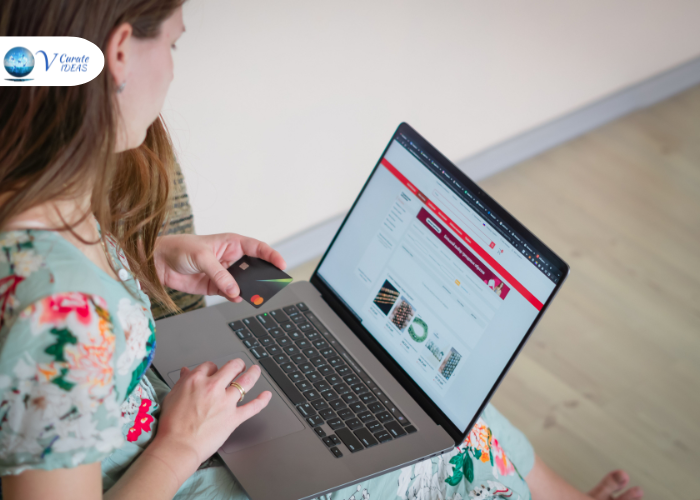
A detailed review of Cash App money management features and why simple digital finance tools are gaining popularity

A detailed review of Airbnb travel experience and why unique stays are changing the way people explore.

A detailed review of CeraVe skincare products and why simple routines are shaping modern beauty habits.

A detailed review of Spotify music streaming experience and why it remains a favorite digital platform

A detailed review of ThredUp online thrift shopping and why sustainable fashion is gaining popularity.
© Copyright 2019 - 2026, All Rights Reserved