Is thrifting true sustainability or just online show?
Thrift shopping once meant sustainability, but has it turned into a curated online aesthetic chasing likes and trends?

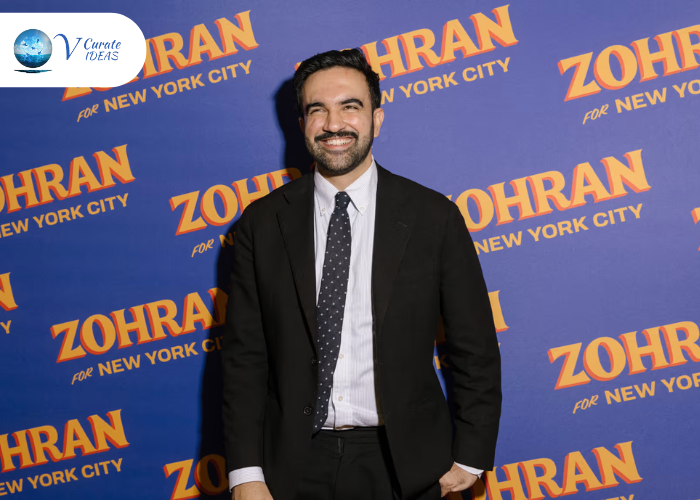
New York has always been a city of firsts. First in ambition, first in art and commerce, first to reinvent itself every time it feels stale. And now, it has another first to add to its towering skyline: Zohran Mamdani, the youngest mayor since 1892, the first Muslim to hold the office, and the first mayor born on the African continent. His election wasn’t just a win. It was a political plot twist. Mamdani entered the race without the deep-pocketed donors, without the party machine behind him, and without the decades of political grooming that usually precede victory in Gotham. What he did have was something rarer: authenticity, conviction, and a narrative powerful enough to turn a long-shot candidacy into a defining moment in American politics. As the confetti settles, it’s easy to see his victory as an uplifting tale of grassroots grit defeating establishment might. But the story doesn’t end here. In many ways, this is where the real drama begins.
Mamdani’s win signals a shift, not just in New York’s political mood but in the Democratic Party’s identity crisis. For years, progressives have searched for a leader who could channel working-class frustration without abandoning big-tent Democratic values. Someone who could talk bread-and-butter economics with a firebrand’s urgency while still embracing the social causes that animate the party’s base.
Mamdani is that rare hybrid:
Policy boldness without apology
Digital-native charisma
A multicultural, modern American story
Comfort taking the fight to powerful interests
When he talks about free childcare, expanded transit, and regulating corporate power, he doesn’t sound like he’s reading from a white paper. He sounds like a young man raised in the activism and energy of Queens, speaking from lived experience, armed with the urgency of someone who has seen communities thrive when policy meets purpose.
Winning the mayoralty is one thing; governing New York is quite another. This is a city where idealism meets infrastructure, ideals crash into entrenched interests, and mayors meet their political mortality swiftly if rhetoric can't survive contact with real-world complexity.
Already, the fault lines are visible:
The state’s Democratic governor opposes the tax hikes he envisions
Business giants on Wall Street view his agenda cautiously
National conservatives are licking their chops for a new "socialist boogeyman"
And yes, his promises—like challenging Israel policy and calling out global leaders—will be tested on a tense world stage
New York may love a revolution, but it hates disruption to trains reaching the office on time.
The city will ask him:
And the nation will watch.
In a year where Democrats from Virginia to New Jersey won comfortably, Mamdani’s victory doesn’t sit neatly into the “moderates vs progressives” storyline pundits love. Instead, it suggests something more interesting:
Democrats win when they speak to working-class needs without shrinking from values.
Whether you agree with Mamdani or not, this is the heartbeat of his movement: A government that sees you, not just counts you. If he succeeds, he may become proof that bold doesn’t mean unelectable. If he stumbles, critics will declare the progressive experiment over. Either way, the political stakes just went from local to national.
Zohran Mamdani is stepping into City Hall not with the quiet nod of insiders, but with the roar of a city that dared to vote for possibility. The chapter opens with hope, friction, and the thrill of uncertainty. New York has always been a mirror for America. Right now, that mirror reflects a country searching for who it wants to be next. Mamdani has a chance to paint a new picture. The question is:
Will it become a masterpiece of modern leadership, or a cautionary tale for dreamers in politics?
For now, history is his to shape. And the world is watching.

Thrift shopping once meant sustainability, but has it turned into a curated online aesthetic chasing likes and trends?

Explore Haymitch’s origin in Sunrise on the Reaping, a gripping Hunger Games prequel.

Spike Lee’s gritty NYC thriller blends legacy, music, and tension in a bold reimagining of a classic.

This isn't just a book; it's the book that had everyone in a chokehold

you're looking for a film that blends dark humor with genuine emotional depth, this it
© Copyright 2019 - 2025, All Rights Reserved